From Burnout to Belonging: What Calm, Ritual-Forward Design Looks Like in Teacher Professional Development
Most professional development starts the same way: a slide with an agenda, a presenter explaining a theory, and a room full of educators politely waiting for it to be over. It's information delivery, not experience — and for teachers already stretched thin by burnout, another hour of being talked at rarely changes what happens Monday morning.
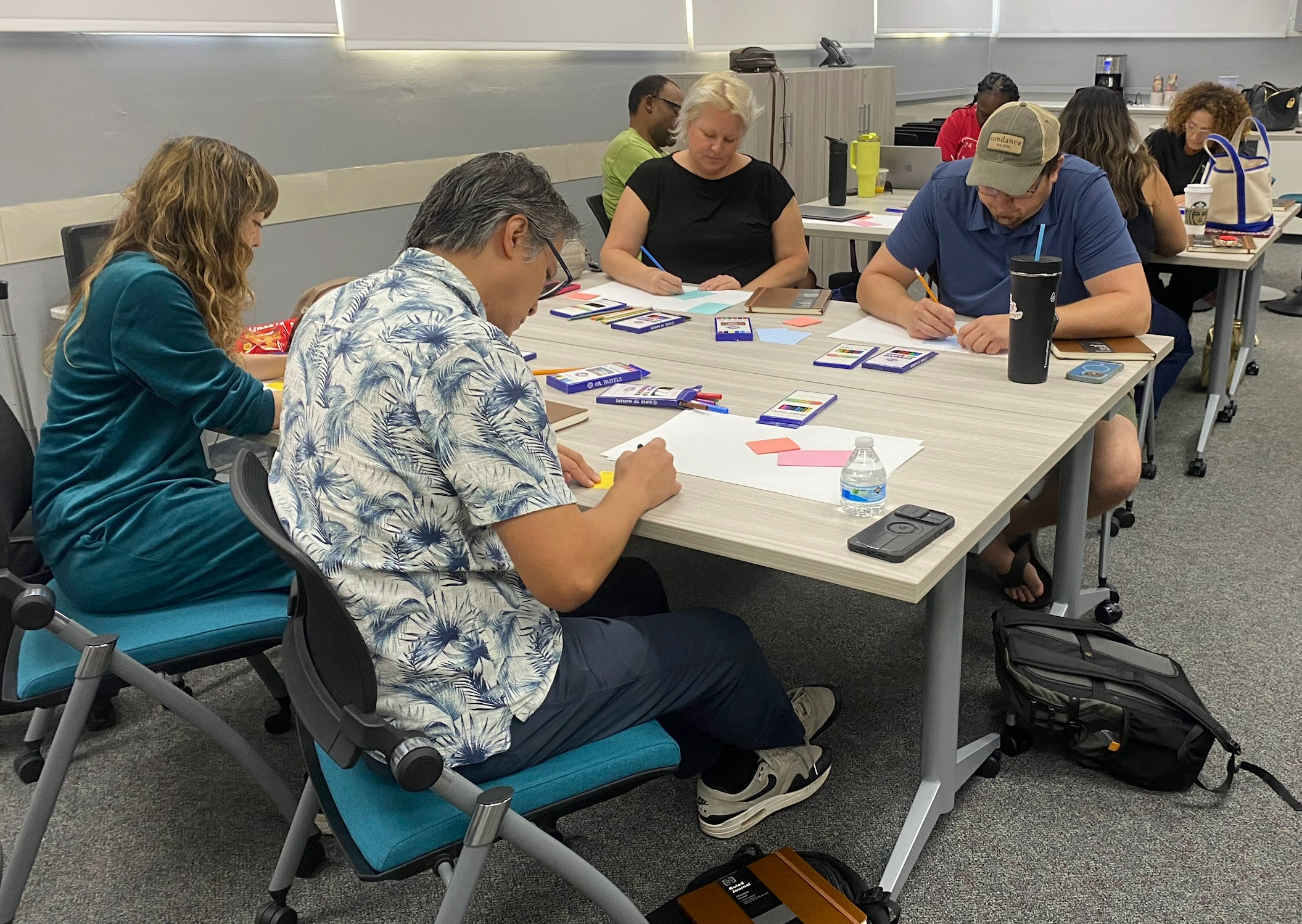
At Upward Together, we build differently. Our latest session — a 90-minute Professional Development for Career Technical Education (CTE) Pasadena Unified educators preparing for the new school year — is one example of what calm design, sensory wellbeing, and ritual-forward creativity look like in a professional learning space.
Designing Backward: Experience First, Theory Second
Rather than opening with a slide explaining the tools we'd be using, we flipped the structure entirely. Teachers move through a series of brief, lived moments — grounding, transition, check-in, closing — before any of it is named or explained. The theory only emerges once people have already felt what it describes. It's the difference between being told about a room and actually walking into it.
Mapping Attention and Connection
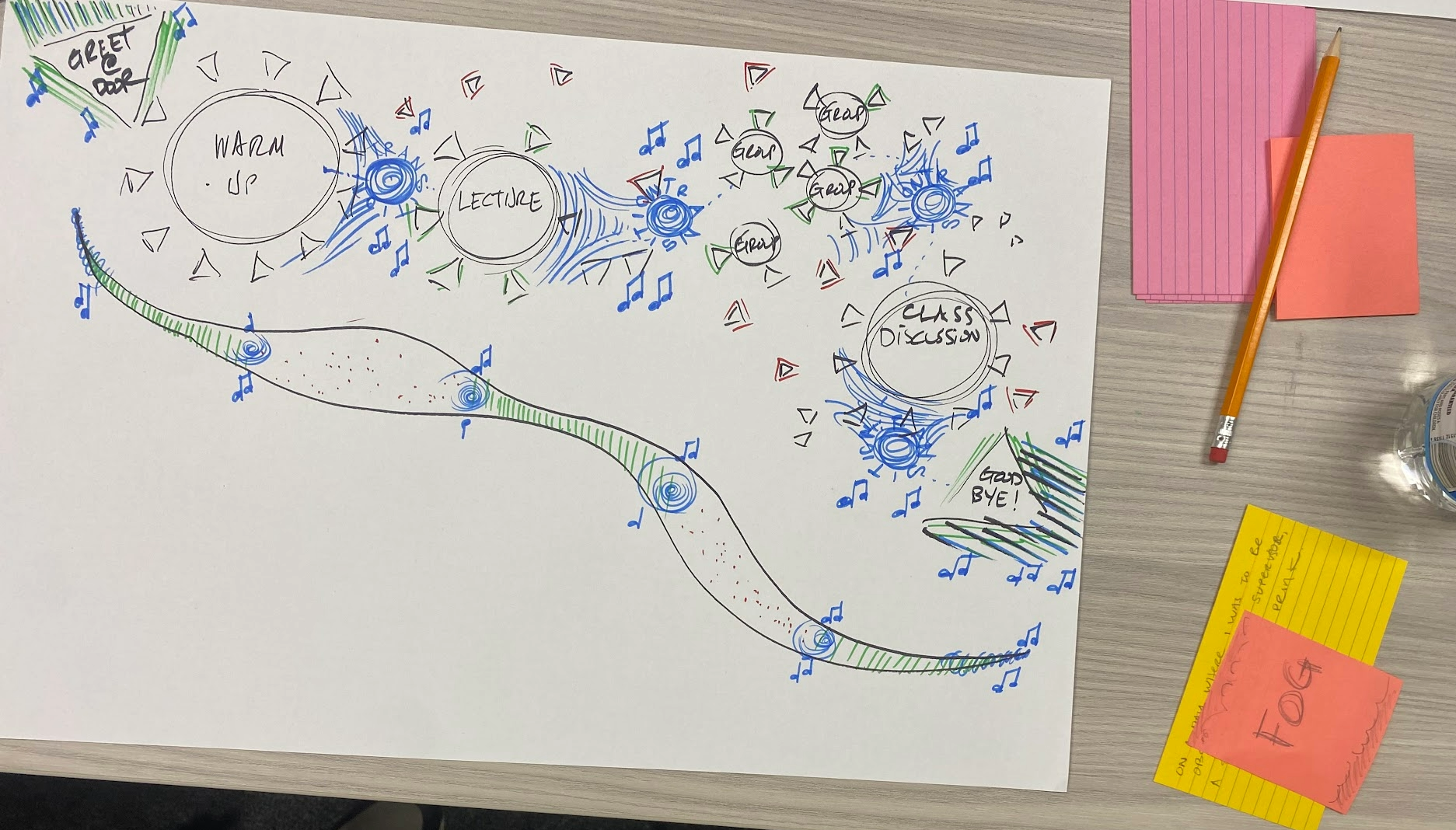
At the center of the session is our Attention & Connection Map — a two-layer reflection tool where teachers chart both where their classes tend to lose focus, and where students feel most and least seen. The insight lies in the overlap: the moments when attention and connection drop at the same spot. That overlap becomes the target for a personalized Class Flow, built around practices teachers have already experienced firsthand.
It's arts-based SEL as structural design, not an add-on. Simple creative rituals give people a way to process and communicate without requiring verbal disclosure — which matters enormously in a CTE context, where shop, lab, and kitchen classrooms move at a different pace than a seated lecture hall.
Why This Matters Beyond the Classroom
Regulation comes before resolution. Being seen is the seed of belonging. Neither of those is unique to schools — any group of people, in any setting, connects better when they feel steady and seen before being asked to perform. It's part of why organizations outside education have started asking us the same questions CTE teachers do.
Building a Culture Shift, One Room at a Time
This is the throughline at Upward Together: calm isn't decoration, and sensory wellbeing isn't a buzzword — they're structural choices that determine whether a room can actually access the work in front of it.
The full Calm Class framework — the complete Attention & Connection Map, the Class Flow methodology, and our library of creative regulation practices — is something we walk through directly with each partner. It's built to be adapted to the room it's used in, not applied generically from a page.
If your school, district, or organization is ready to move professional development — or workplace culture — from information delivery to lived experience, book a session and experience it yourself.
About Creative Wellbeing
Creative Wellbeing is a strategic collaboration that grew out of conversations about how to bring more healing into our systems — and how to shift culture by nurturing wellbeing through art.
It is a partnership among the Los Angeles County Department of Arts and Culture, the Office of Child Protection, the Department of Mental Health, the Department of Children and Family Services, the Department of Justice, Care and Opportunities, and the Arts for Healing and Justice Network, as part of the LA County Arts Education Collective. Together, these organizations are advancing the goals of Arts for All Children, Youth, & Families: Los Angeles County's Regional Blueprint for Arts Education.
Upward Together is honored to contribute to this vision — bringing art as a language of healing and connection into school and family settings.
Upward Together partners with schools and organizations across Los Angeles to build calm, connected, creatively grounded cultures.